
Water Safety
DROWNING CRISIS
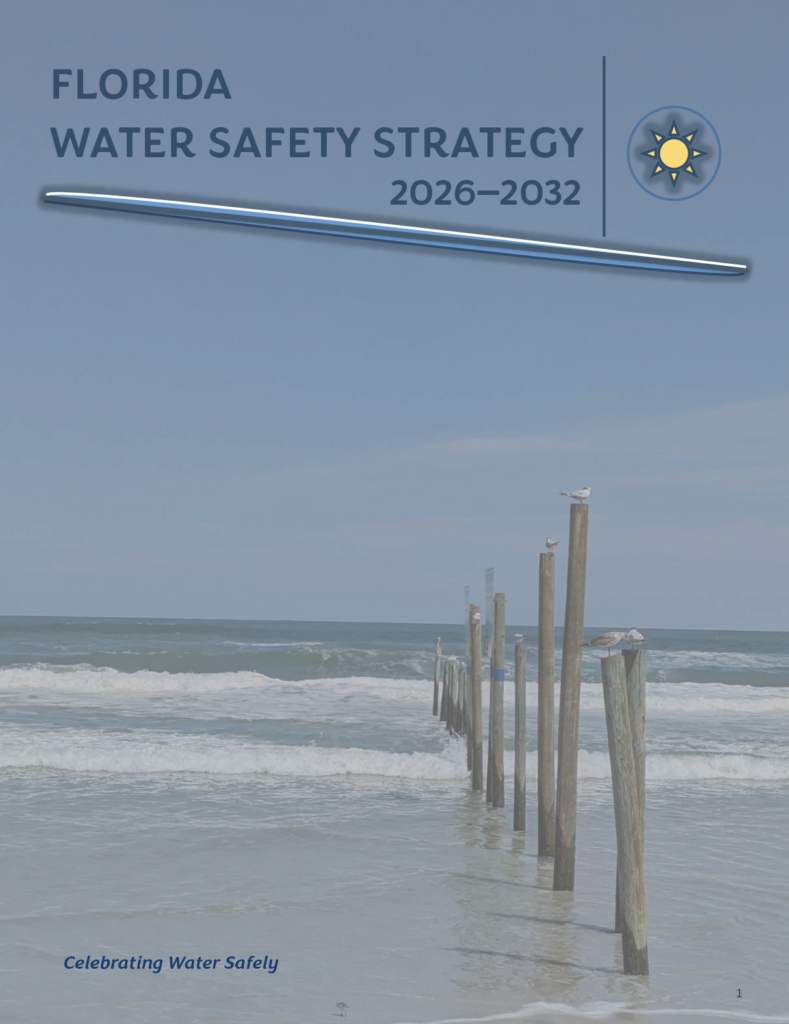
Florida Water Safety Strategy: Moving From Planning to Prevention
DASS is proud to have been represented on the Steering Committee that helped develop the Florida Water Safety Strategy 2026–2032, bringing together state agencies, water-safety organizations, advocates, and families to create a coordinated approach to reducing drowning across Florida.
We are especially grateful to the Florida Department of Children and Families (DCF) and to Tina Morgan and Kirby Morgan for their extraordinary dedication and leadership throughout this process. Tina and Kirby led the collaborative team that brought together agencies, coalitions, and task forces from across Florida. Their commitment to preventing childhood drowning and bringing people together around this issue has been invaluable.
For DASS, the Strategy also reinforces an urgent priority: Florida must create safer environments for children with autism and other developmental disabilities. Water safety cannot depend solely on a child’s ability to swim or a parent’s ability to maintain constant supervision. Children who wander or elope, are attracted to water, have limited awareness of danger, or communicate differently may face risks that require additional layers of protection.
We must look beyond swimming pools and consider the entire environment surrounding a child—including lakes, canals, retention ponds, beaches, and other open water. The Strategy recognizes both open-water safety and water emergency preparedness as statewide priorities and acknowledges disability as one factor that can make access to water-safety opportunities more difficult.
We thank DCF, Tina, Kirby, and every member of the Steering Committee for taking this important step for Florida. The Strategy gives us a roadmap. Now we must turn that roadmap into meaningful action that makes Florida safer for every child.
Drowning is Preventable
Drowning is one of the leading causes of death for children. For children with disabilities, including autism, ADHD, developmental disabilities, and intellectual disabilities, the risk is even greater.
Many children are naturally attracted to water, may wander or elope, have difficulty recognizing danger, or may not be able to communicate when they are in trouble.
The good news is that drowning is preventable. Layers of protection can save lives.
Why Are Children with Disabilities at Increased Risk?
Some children may:
- Be drawn to water such as pools, lakes, canals, ponds, fountains, or beaches.
- Wander away from home, school, or caregivers.
- Have difficulty understanding safety rules.
- Lack swimming skills.
- Have communication challenges that make it difficult to call for help.
- Have sensory interests related to water.
- Overestimate their swimming ability.
- Freeze or panic in an emergency.
Every child is different, but understanding your child’s unique strengths and challenges is the first step toward prevention.
The Five Layers of Water Safety
1. Constant Adult Supervision
Nothing replaces active supervision.
When children are near water:
- Designate a “Water Watcher.”
- Put away phones and distractions.
- Stay within arm’s reach of young or vulnerable children.
- Avoid assuming another adult is watching.
Drowning is often silent and can happen in seconds.
2. Barriers and Secure Environments
Create layers of protection around water.
Consider:
- Four-sided pool fencing
- Self-closing and self-latching gates
- Door alarms
- Window alarms
- Pool alarms
- GPS tracking devices
- Home security systems
Remember that supervision and barriers should work together.
3. Learn to Swim
Swimming lessons are one of the most effective drowning prevention tools available.
When selecting lessons:
- Look for instructors experienced with children with disabilities.
- Ask about sensory accommodations.
- Discuss communication needs.
- Practice regularly.
Swimming lessons reduce risk, but do not make a child “drown proof.”
Florida offers a swim voucher to children in need. Information on the swim voucher can be found here.
4. Wear Life Jackets
Use Coast Guard-approved life jackets (water wings and puddle jumpers are NOT Coast Guard approved):
- Around lakes, canals, rivers, and beaches.
- On boats and docks.
- During water activities when swimming skills are limited.
Water wings and inflatable toys are not safety devices.
5. Learn CPR
Parents, grandparents, caregivers, babysitters, and siblings should know CPR.
If a drowning emergency occurs:
- Remove the child from the water.
- Call 911.
- Begin CPR if the child is not breathing normally.
- Continue until emergency responders arrive.
Immediate CPR can save a life and improve outcomes.
Understanding Wandering and Elopement
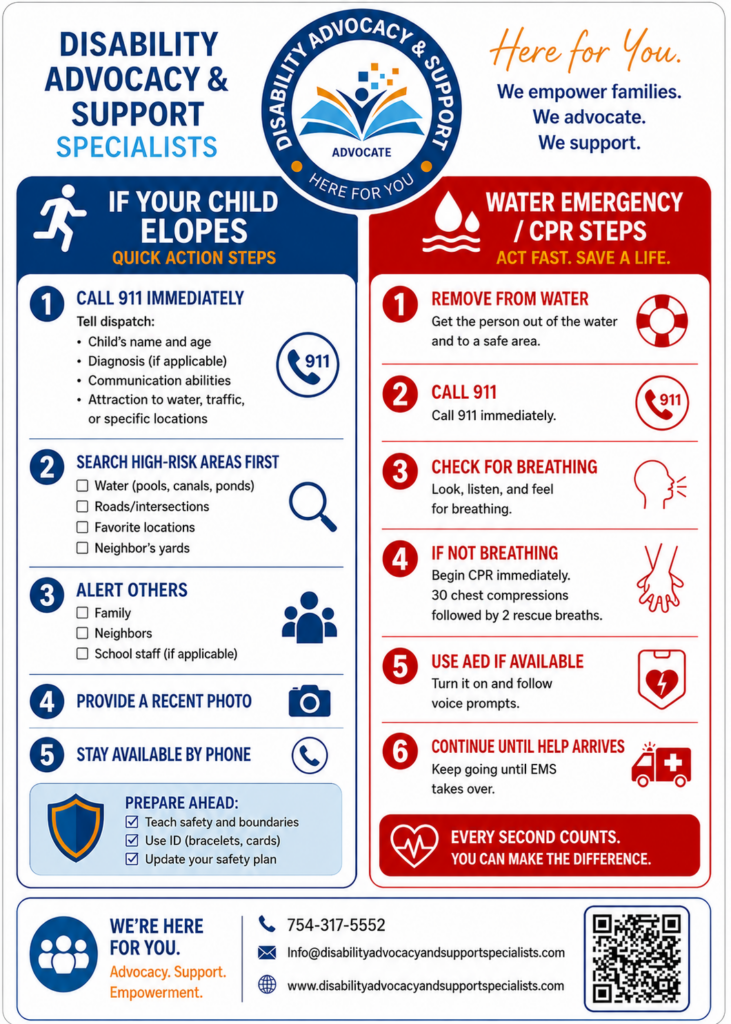
For many families of children with disabilities, wandering—also called elopement—is one of the greatest safety concerns they face. Wandering occurs when a child leaves a safe environment without the knowledge or permission of a caregiver. Children may wander for many reasons, including curiosity, sensory interests, the desire to reach a favorite place or object, or an attempt to escape an overwhelming situation. Because many children are unable to recognize danger or communicate their location, wandering can quickly become a life-threatening emergency.
One of the most significant risks associated with wandering is drowning. Research has shown that children with autism who wander are often attracted to water, such as pools, lakes, ponds, canals, or retention areas. These bodies of water may seem inviting but can become dangerous within seconds. Teaching water safety and swimming skills is important, but it should be combined with other protective measures such as close supervision, secure locks and alarms, identification bracelets, family emergency plans, and educating neighbors and caregivers about your child’s tendency to wander.
SEARCH WATER FIRST
If your child is missing:
- Call 911 immediately.
- Tell dispatch that your child has a disability and may be attracted to water.
- Check pools, canals, ponds, lakes, retention ponds, and nearby waterways first.
- Provide a recent photo of your child.
- Alert neighbors and family members immediately.
Time matters. Seconds count.
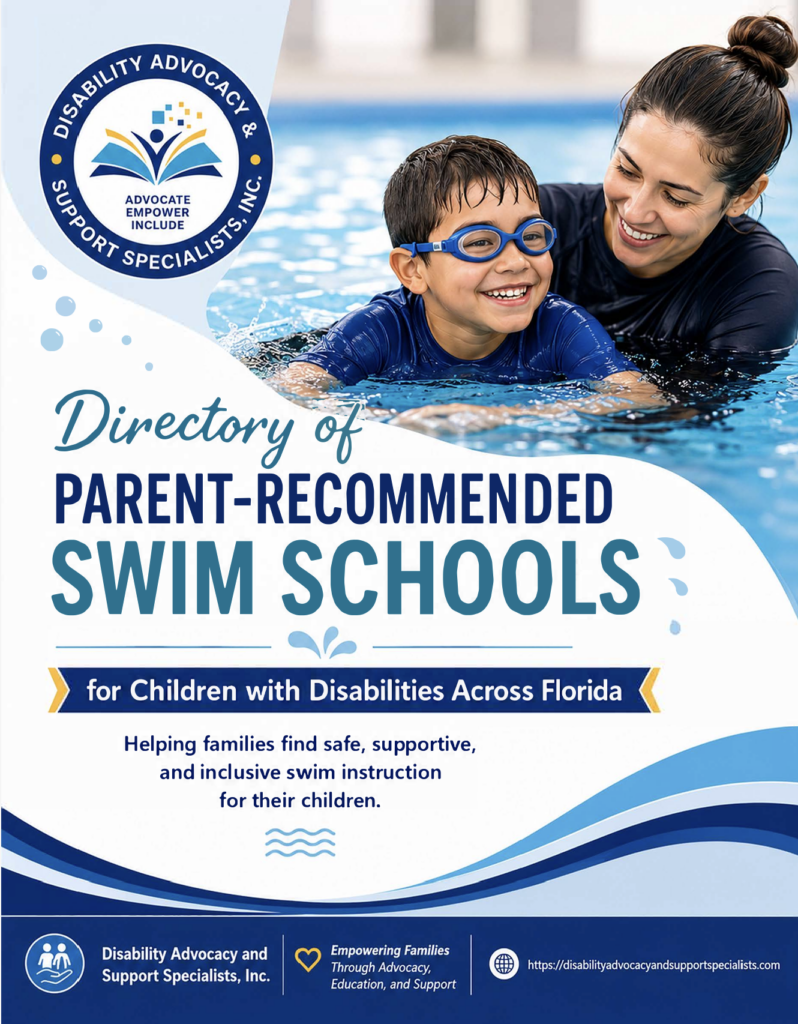
Welcome to the Florida Directory of Parent-Recommended Swim Schools for Kids with Disabilities
Swim teacher guide

Learning to swim is one of the most important safety skills a child can develop. For many families of children with disabilities, finding a swim instructor who is patient, understanding, and willing to adapt lessons to a child’s unique needs can be challenging. This directory was created to make that search a little easier.
The schools and instructors included in this guide were recommended by parents of the disability community throughout Florida. While many have experience working with children with disabilities, every child is unique. We encourage families to contact providers directly to discuss their child’s specific strengths, needs, communication style, and learning preferences before enrolling. A list of voucher swim schools can be found here.
Please note that inclusion in this directory does not constitute an endorsement or recommendation by Disability Advocacy and Support Specialists, Inc. (DASS).
Our hope is that this directory helps more children gain confidence in and around the water while giving families greater peace of mind. Every child deserves the opportunity to learn lifesaving water skills in an environment where they feel safe, supported, and encouraged.
If you know of a swim school or instructor that has experience teaching children with disabilities and should be considered for a future edition of this directory, we’d love to hear from you.